
Інвертор з розділеною фазою поза мережею: Повний посібник з позамережевих енергетичних систем Північної Америки
Від hqt
2026.06.17Пов'язані дописи
SANDISOLAR співпрацює з Jinko Solar для реалізації автономного сонячного та акумулюючого проєкту потужністю 10,7 МВт
23 вересня 2026 року
48V 6kW позамережевий інвертор: чому акумуляторні системи на 48V є поширеними для сонячних систем з високою потужністю
31 серпня 2026 року
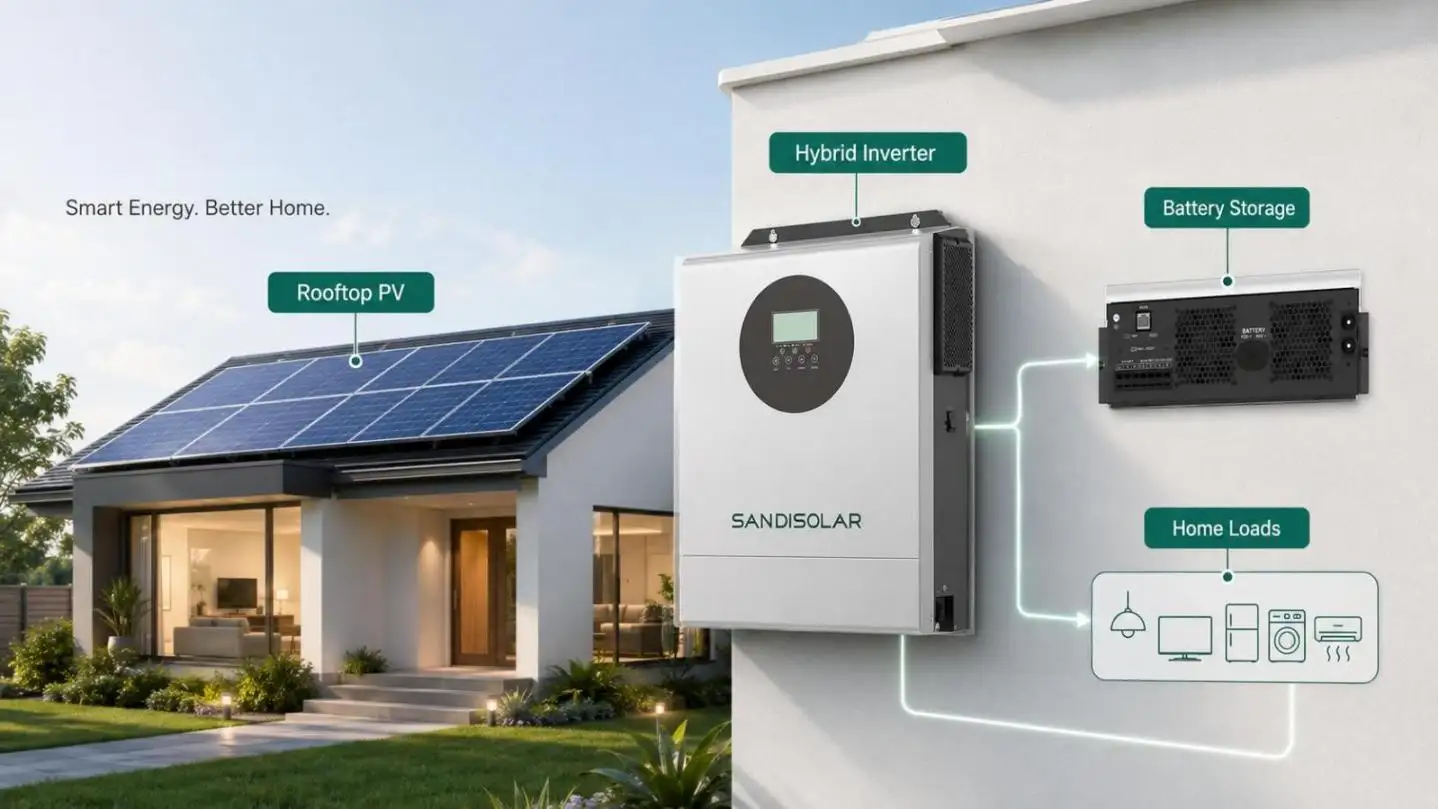
Встановлення сонячних систем у житлових будинках: технічне підбор, підбор систем і керівництво з монтажу
31 серпня 2026 року
Інвертор з розділеною фазою поза мережею перетворює постійне живлення з батарей у змінне живлення, яке працює зі стандартними північноамериканськими приладами. Ключова особливість — це вихідний сигнал: дві 120 В, які разом забезпечують живлення 240 В — стандартне електричне обладнання в більшості будинків США та Канади.
На практиці, розділений фазний позамережевий інвертор дозволяє живити як низьковольтне, так і високовольтне навантаження з однієї системи:
- Навантаження 120В, такі як освітлення, електроніка, вентилятори та дрібна техніка
- Навантаження 240V, такі як водяні насоси, насоси для свердловин, сушарки, зварювальні апарати, печі та деяке обладнання HVAC
- Змішані побутові лінії, які потребують стабільної, як у комунальних системах живлення
Це робить інвертори з роздільною фазою особливо цінними для автономних будинків і резервних систем, де користувачам потрібна вихідна потужність, а не лише одна напруга.
Чому розділена фаза має значення для автономної електроенергії
У Північній Америці електроенергія з розділеною фазою є стандартом домогосподарств. Інвертор з розділеною фазою поза мережею може підтримувати набагато ширший спектр реального обладнання без необхідності переосмислювати електричне споживання під інвертор.
Якщо автономна система забезпечує лише 120V однофазний вихід, вона може працювати з освітленням і малими пристроями, але може мати труднощі з обладнанням з більшим попитом. Інвертор із розділеною фазою вирішує цю проблему, забезпечуючи роботу на 240 В, при цьому підтримуючи звичайні 120 В схеми.
Це найважливіше для:
- Сільські будинки та будиночки
- Ферми та ранчо
- Майстерні та гаражі
- Віддалені телекомунікаційні або інфраструктурні об'єкти
- Резервні енергосистеми для критичних домашніх навантажень
Краще підходить для сучасних енергетичних потреб
Сьогодні покупці поза мережею часто очікують на системах, які можуть працювати з індукційними плитами, тепловими насосами, компресорами з регульованою швидкістю, розумною домашньою електронікою та системами очищення води. Оскільки ці навантаження можуть бути енергоємними або потребувати стабільної напруги, розподілений вихід забезпечує більш гнучку основу.
Поточні ринкові тенденції, що стимулюють попит
Енергетична незалежність стає мейнстрімом. Більше споживачів прагнуть зменшити залежність від мережі з міркувань стійкості, контролю витрат або способу життя, особливо в районах з частими відключеннями, високими тарифами на комунальні послуги або розширенням сільської забудови.
Впровадження літієвих батарей прискорилося завдяки кращому терміну служби циклу, більшій корисній ємності та легшій інтеграції системи. Оскільки батареї стають більш поширеними, покупці все частіше хочуть інвертори, які розумно контролюють зарядку, розрядку та контроль навантаження.
Багато покупців більше не хочуть систему, яка живить лише аварійне резервне копіювання. Вони хочуть системи, які підтримують повсякденне життя, а це означає більше уваги до потужності перенапруги, безперервної потужності та здатності справлятися з індуктивними навантаженнями, такими як насоси та компресори.
Межа між позамережевими інверторами та гібридними інверторами розмита. Багато сучасних продуктів поєднують сонячну зарядку, управління акумуляторами, підтримку генератора та можливості підключення до мережі. Навіть покупці, які планують залишатися повністю автономними, часто віддають перевагу інверторним платформам, які залишають простір для майбутнього розширення.
На багатьох ринках сонячна енергія та накопичення залишаються привабливими завдяки доступним стимулам, податковим кредитам або програмам енергетичної стійкості. Хоча ці показники відрізняються залежно від регіону та змінюються з часом, загальний напрямок підтримує впровадження житлових і малих комерційних сонячних панелей з накопиченнями.
Розділена фаза порівняно з іншими типами інверторів
Однофазний інвертор зазвичай забезпечує лише один вихід напруги, часто 120V або 230V залежно від регіону. Він добре працює для невеликих кабін або легких вантажів, але може бути обмеженим, коли потрібна техніка на 240V.
Розділений фазний інвертор кращий, коли вам потрібні як 120V, так і 240V ланцюги, ваша власність використовує стандартну північноамериканську домашню проводку або ви хочете більшу гнучкість для майбутнього зростання навантаження.
Трифазні інвертори зазвичай використовуються в промислових, сільськогосподарських або великих комерційних приміщеннях і не є необхідними для більшості будинків та автономних житлових будинків.
Інвертор поза мережею працює незалежно від енергомережі. Гібридний інвертор може підтримувати взаємодію з мережею, сонячну зарядку, резервне живлення від батареї, а іноді й контроль експорту. Обирайте автономну мережу, якщо на об'єкті немає надійного підключення до комунікацій, ви хочете повну енергетичну автономію або плануєте покладатися на сонячну енергію, батареї і, можливо, генератор. Обирайте гібрид, коли пізніше можна підключитися до мережі, хочете резервну та підтримку мережі або потребують більшої гнучкості в встановленні.
Ключові функції, на які варто звернути увагу
Безперервний вихідний показник показує, скільки потужності інвертор може забезпечити з часом. Це має відповідати очікуваному навантаженню з достатнім запасом для реального використання.
Багато приладів викликають значні сплески при запуску. Насоси свердловин, холодильники, компресори та електроінструменти можуть потребувати значно більше енергії протягом кількох секунд, ніж під час звичайної роботи. Хороший інвертор має справлятися з цими стрибками без спрацьовування.
Переконайтеся, що інвертор сумісний з напругою та хімічним хімпіям вашого акумуляторного банку. Більшість сучасних систем використовують літієві батареї, але інвертор повинен підтримувати правильний профіль заряджання та можливості зв'язку там, де це потрібно.
Якщо ви будуєте автономну систему на сонячній енергії, інвертор повинен включати або інтегрувати з контролером сонячного заряду MPPT для підвищення ефективності та спрощення проводки.
Для віддалених місць або зимових умов сумісність генераторів значно підвищує стійкість у періоди низького сонця та допомагає швидко заряджати батареї за потреби.
Віддалений моніторинг, панелі керування на основі додатків і сповіщення про несправності полегшують управління продуктивністю системи. Це стає дедалі важливішим, оскільки покупці очікують більшої прозорості щодо виробництва енергії та стану батарей.
Високоефективний інвертор зменшує втрати енергії. Споживання холостого ходу також має значення в автономних системах, де важливий кожен ват. Менше споживання в режимі очікування допомагає подовжити час роботи батареї та покращити загальну автономність.
Поширені застосування
Інвертори з розділеною фазою поза мережею підходять для широкого спектра випадків використання. Житлові будинки без мережі повинні працювати з звичайними домашніми навантаженнями, зберігаючи при цьому комфорт і надійність. Сплітфазний інвертор підтримує кухонну техніку, пральне обладнання, водяні насоси та освітлення у знайомому електричному форматі.
Сільські об'єкти часто покладаються на обладнання з напругою 240V, таке як насоси, двигуни та інструменти для обробки. Розділені фазні системи природно підходять, оскільки можуть витримувати як звичайні, так і важкі навантаження.
Для гаражів, майстерень і мейкерспейсів необхідна можливість видавати інструменти та обладнання зі стабільною вихідною напругою 240 В. Сонячні та акумуляторні системи також можуть зменшити шум генератора та споживання пального.
Деякі користувачі не повністю відключені від мережі, але хочуть чисте резервне живлення на випадок відключень. Розділений фазний позамережевий інвертор може слугувати ядром системи резервного копіювання всього будинку, якщо його правильно спроектувати.
Як визначити розмір інвертора з розділеною фазою поза сіткою
Почніть із переліку всіх вантажів, які хочете живити: світло, холодильник, насос для свердловини, мікрохвильовка, кондиціонер, пральне обладнання, електроінструменти та електроніку.
Деяке обладнання працює стабільно. Інші починають з високого сплеску. Інвертор має бути розміром для обох.
Один лише показник потужності недостатній. Вам також потрібно оцінити щоденне споживання кіловат-годин, щоб правильно оцінювати розміри батарей і сонячних панелей.
Більшість людей додають багато з часом. Якщо плануєте розширювати, обирайте інвертор з додатковим запасом над головою, а не той, що ледве відповідає сучасним потребам.
Інвертор має працювати з батарейним блоком, контролером заряду, сонячною батареєю та будь-яким входом генератора. Збалансована система працює краще, ніж один надмірно великий компонент у парі зі слабким підтримуючим обладнанням.
Особливості монтажу
Автономні системи потребують безпечної проводки, правильного захисту від перевантаження струму, заземлення та відключень. Місцеві електричні норми та правила інспекції можуть застосовуватися залежно від регіону.
Інвертор слід поєднувати з щитом або центром навантаження, налаштованим на розподілений фазний вихід. Правильне балансування фаз може покращити стабільність системи та зменшити незручності.
Батарейні банки слід встановлювати в місці з належною вентиляцією, контролем температури та безпечним доступом. Літієві батареї легше керувати, ніж старі хіміки, але вони все одно потребують правильного встановлення.
Добре спроектована система повинна включати захист від перенапруги, вимикачі відключення та управління несправностями для захисту як інвертора, так і підключених навантажень.
Навіть досвідчені користувачі DIY отримують користь від професійного перегляду проєктування систем, особливо якщо в об'єкті є насоси, HVAC або кілька високопотужних ланцюгів.
Що запитують покупці у 2024 році та далі
Покупці стають більш технічними та вибірковими. Вони хочуть відповісти на практичні питання: чи може інвертор керувати цілим будинком? Чи запустить насос свердловини чи кондиціонер? Чи сумісний він із літієвими батареями? Скільки сонячної енергії потрібно? Чи можу я додати генератор пізніше? Чи доступний моніторинг з телефону чи комп'ютера? Чи може система масштабуватися з часом?
Ці питання відображають ширший ринковий зсув. Покупці шукають не лише резервне живлення. Вони шукають довгострокову енергетичну інфраструктуру.
Вибір правильного інвертора з розділеною фазою поза мережею
Найкращий вибір залежить від ваших цілей. Якщо ви живите невелику кабіну з невеликими навантаженнями, компактний інвертор із базовим контролем і помірним перенапругою може бути достатнім. Якщо ви проектуєте будинок на постійний робочий день, вам може знадобитися модель з більшою потужністю з потужною підтримкою генератора, комунікацією від батареї та надійними варіантами розширення.
Перед покупкою порівняйте безперервний і потужний вихід, сумісність напруги акумулятора, радіус дії сонячних вхідних пристроїв, інтеграцію генератора, функції моніторингу, гарантійну та сервісну підтримку, а також потенціал розширення.
Також враховуйте якість документації та технічної підтримки. У автономних системах хороша підтримка може мати таке ж значення, як і сирі характеристики.
Висновок
Розділений фазний автономний інвертор — один із найпрактичніших варіантів для тих, хто будує житлову автономну або резервну систему живлення в Північній Америці. Він забезпечує потужність 120/240В, яка дійсно потребує сучасним будинкам і майстерням, створюючи гнучку основу для підтримки сонячної енергії, акумуляторного зберігання та генераторів.
У міру того, як ринок рухається до енергетичної незалежності, більшого впровадження акумуляторів і більш ефективної електрифікації домогосподарств, розділені фазні системи стають ще більш актуальними. Вони вже не є просто нішевою технічною опцією. Для багатьох користувачів, які працюють поза мережею, це найрозумніший спосіб надійно та ефективно живити реальні навантаження.
Якщо ви плануєте автономний сонячний проєкт, правильний вибір інвертора має починатися з ваших навантажень, стратегії щодо батарей та майбутніх цілей розширення. Коли ці частини вирівняні, розділений фазний позамережевий інвертор може забезпечувати надійну енергію роками з набагато меншими компромісіями, ніж менші одновольтні системи.


Зв'яжіться з нами
Пов'язані дописи
SANDISOLAR співпрацює з Jinko Solar для реалізації автономного сонячного та акумулюючого проєкту потужністю 10,7 МВт
23 вересня 2026 року
48V 6kW позамережевий інвертор: чому акумуляторні системи на 48V є поширеними для сонячних систем з високою потужністю
31 серпня 2026 року
Встановлення сонячних систем у житлових будинках: технічне підбор, підбор систем і керівництво з монтажу
31 серпня 2026 року