
Як побудувати систему резервного живлення для всього дому за допомогою сонячного інвертора на 220 В
Від hqt
2026.06.17Пов'язані дописи
SANDISOLAR співпрацює з Jinko Solar для реалізації автономного сонячного та акумулюючого проєкту потужністю 10,7 МВт
23 вересня 2026 року
48V 6kW позамережевий інвертор: чому акумуляторні системи на 48V є поширеними для сонячних систем з високою потужністю
31 серпня 2026 року
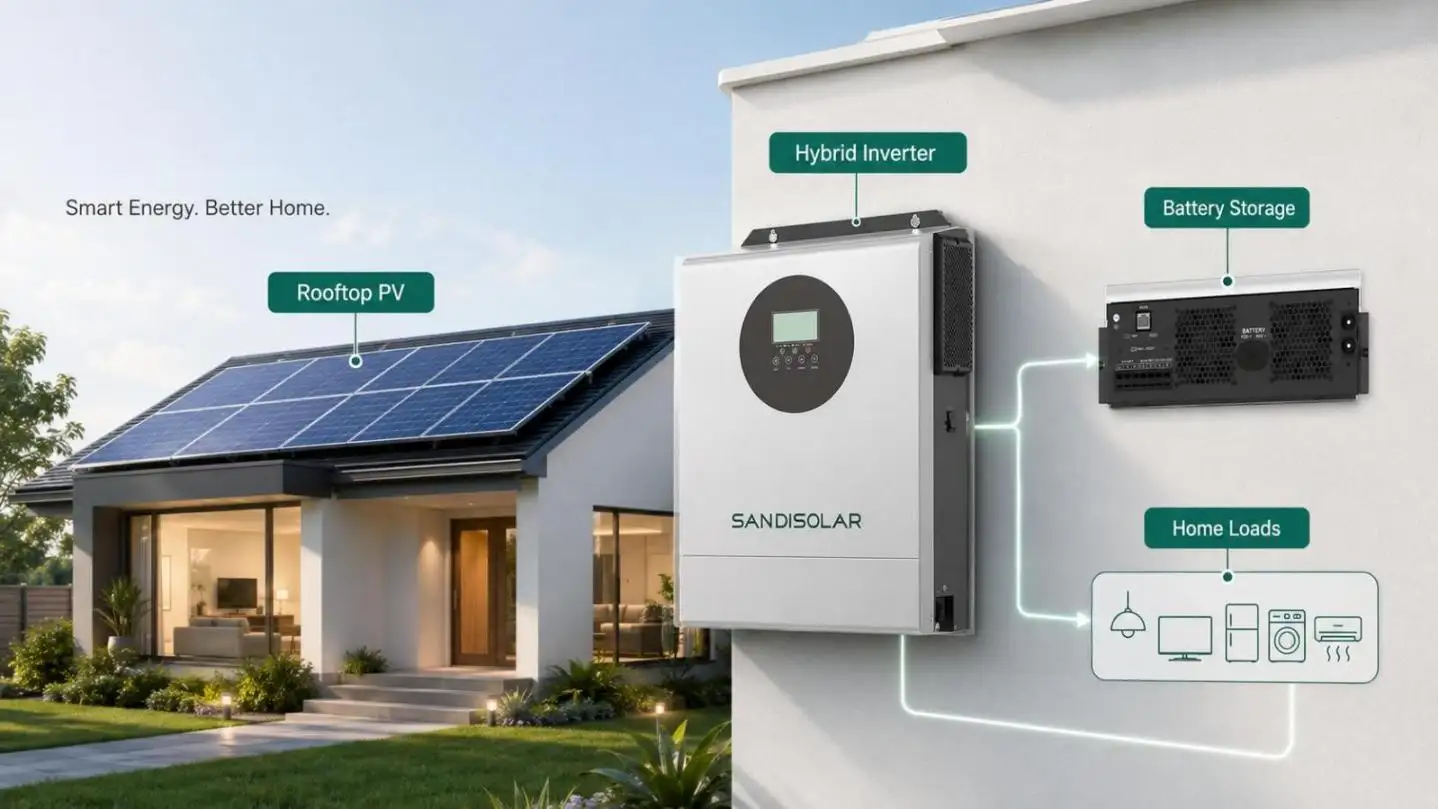
Встановлення сонячних систем у житлових будинках: технічне підбор, підбор систем і керівництво з монтажу
31 серпня 2026 року
Відключення електроенергії зростають через екстремальні погодні умови та старіння мереж. Сонячний інвертор на 220 В забезпечує безшумне, безпаливне резервне живлення для необхідної техніки — на відміну від портативних генераторів. У цьому посібнику пояснюється, як підключити 220V автономний інвертор (за допомогою SANDISOLAR SD-48110W-МИяк довідка) до розподільчої панелі вашого дому, створюючи безшовну систему, яка автоматично живить критичні навантаження під час відключень.
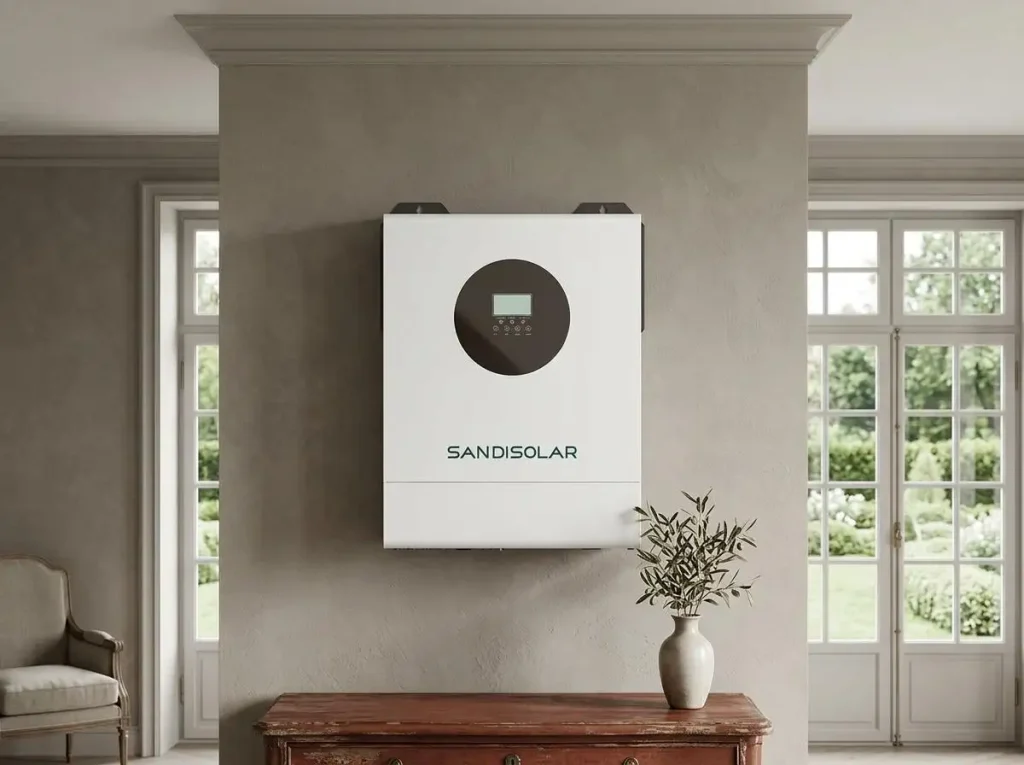
Що робить сонячний інвертор на 220 В придатним для резервного копіювання всього дому?
Поширена житлова мережа забезпечує 220 В - 240 В змінного струму залежно від регіону. Сонячний інвертор на 220 В повинен забезпечувати стабільний вихід чистої синусоїди в цьому діапазоні та з частотою 50 Гц або 60 Гц для безпечної роботи приладів. SANDISOLAR SD-48110W-EU має такі конструктивні особливості для досягнення вищезазначеного:
• Вихід чистої синусоїди при 230 VAC: дозволяє працювати з усією побутовою технікою, навіть з моторами та чутливими медичними приладами.
•1 кВт безперервної потужності: достатня потужність для роботи кількох важких вантажів навіть при їх одночасній роботі (наприклад, 2 кондиціонери, холодильник, насос для свердловини та освітлення).
• Подвійний MPPT дизайн: Функція, що дозволяє використовувати 2 сонячні батареї, навіть ті, що орієнтовані на схід/захід, і навіть ті, що частково затінені, для найефективнішого отримання сонячної енергії.
•160А зарядного струму: Дозволяє швидко заряджати на літієву батарейну батарею 48 В як на сонячній системі, так і на електромережі.
• Гнучке фотоелектричне проєктування з (60 - 500 В постійного струму): Працює з різними конструкціями сонячних панелей, а також з тими, що оптимізовані для збору сонячної енергії в умовах обмеженого освітлення.
SD-48110W-EU має здатність бути серцем системи резервного копіювання всього дому. Потрібно ретельно продумати систему, яка зможе безпечно інтегрувати SD-48110 до вашого існуючого електричного щита.
Крок 1: Визначте свої критичні навантаження
Не кожна лінія у вашому домі потребує резервного живлення. Спроба зробити резервне копіювання вимагала б надто великої батареї та інвертора. Натомість перелічіть основні прилади на 220В, які ви хочете підтримувати під час відключення:
• Холодильник або морозильник (критично важливо для безпеки харчових продуктів)
• Вентилятор печі або циркулятор котла (підтримує роботу опалення взимку)
• Вибрані схеми освітлення (світлодіоди дуже ефективні)
• Інтернет-модем/роутер і кілька зарядних пристроїв для телефонів/ноутбуків
• Один або два кондиціонери (якщо клімат потребує охолодження)
Підсумуйте їхню робочу потужність і враховуйте стрибки при запуску (двигуни можуть споживати у 3–5 разів більше робочої потужності протягом кількох секунд). Потужність SD-48110W-EU у 11 кВт забезпечує достатній простір для більшості.

Крок 2: Встановити підщитку критичних навантажень
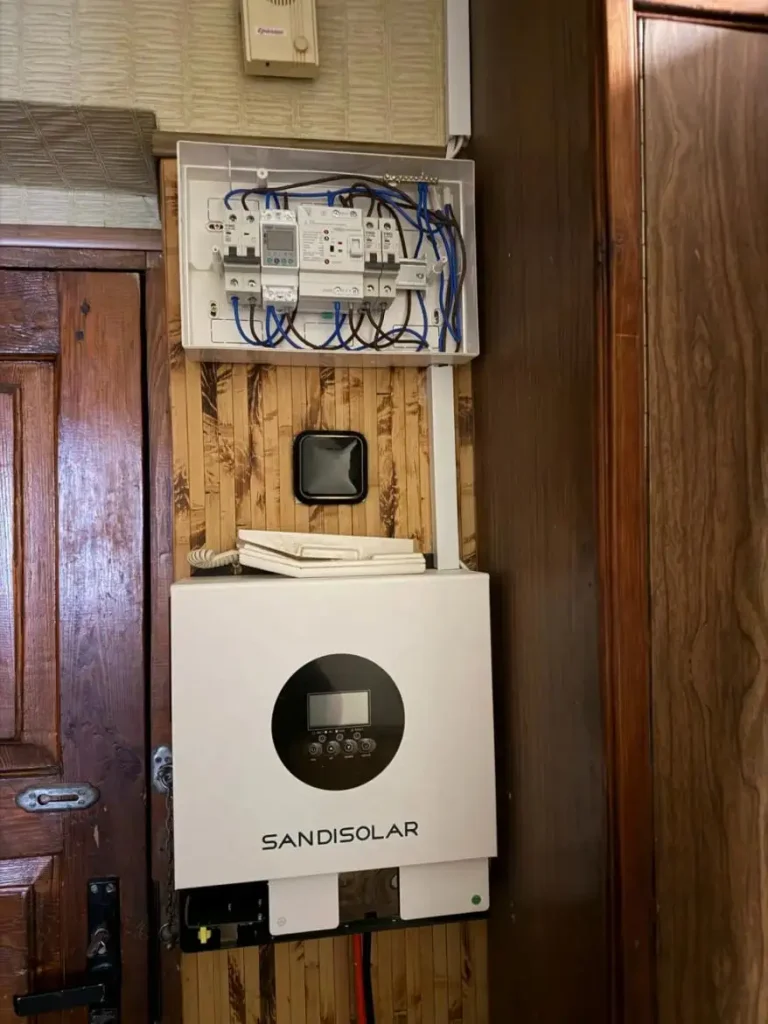
Найбезпечніший і найпоширеніший спосіб інтеграції сонячного інвертора на 220В — це встановлення спеціальної підщити «критичних навантажень» поруч із головним розподільчим щитом. Ось як це працюватиме:
•Головна щитка: продовжує споживати енергію з мережі для живлення всіх стандартних схем (електричні печі, водонагрівачі, розетки гаражів тощо)
• Підщитка: Живлення подається від інвертора (у разі відключення) або від мережі (коли мережа доступна). Лише основні схеми переміщуються на цю підпанель.
Чому підщитку віддають перевагу перед зворотним живленням на головний щит?
•Запобігає перевантаженню інвертора через неважливі навантаження.
• Запобігає небезпечному зворотному подачі до електропостачання (що вражає працівників лінії).
• Полегшує процес виконання кодексів у більшості юрисдикцій.
Інвертор SANDISOLAR має кілька режимів пріоритету виходу (SUB, SBU, SUF), що дозволяє гнучко використовувати споживання енергії з сонячної енергії, батареї або мережі. Наприклад, режим SBU дозволяє інвертору споживати сигнал з мережі лише при низькому рівні батареї, забезпечуючи стабільне живлення підпанелі від інвертора і максимізуючи економію.
Крок 3: Виберіть метод передачі – ручний чи автоматичний
Потрібно здійснювати передачу джерела живлення з інвертора до мережі через підпанель, зазвичай одним із двох методів:
• Ручний перемикач передачі (MTS): перемикач, який потрібно фізично керувати для передачі живлення. Під час відключення мережі це зазвичай дешевший метод, оскільки для роботи потрібно менше обладнання. Підходить для регіонів із рідкісними відключеннями.
• Автоматичний перемикач передачі (ATS) або інвертор із вбудованим ATS: SD-48110W-EU не має вбудованого ATS (паралельна можливість не підтримується), але можна встановити зовнішній ATS між мережею та входом інвертора. Коли живлення мережі відключається, ATS відключає мережу і сигналізує інвертору почати живлення на підщитку. Деякі користувачі натомість покладаються на функції «запуску без батарейки» та «активації літію» інвертора, щоб система могла запускатися навіть після глибокого розряду.
Практична порада: якщо вам комфортно керувати вручну, простий перемикач (розрахований на 63A або вище) є економічним. Для справжнього резервного копіювання «встанови і забув» інвестуйте у сумісний ATS.
Крок 4: Правильне заземлення та безпека для систем 220V
При роботі з 220V змінним струмом необхідно дотримуватися безпечних норм. Інвертор SANDISOLAR має антиамортизаторну клему та знімну кришку пилу для зменшення випадкового контакту з активними деталями. Однак заземлення на рівні системи — це ваша відповідальність:
• З'єднання нейтралі з землею: У більшості автономних систем нейтральний вихід інвертора має бути підключений до землі в одній точці (зазвичай всередині головного щита або самого інвертора). Перевірте місцеві правила — деякі інвертори мають вбудовані реле для з'єднання, які автоматично підключають нейтраль до землі при роботі в режимі поза мережею.
• Електрод заземлення: Підключіть заземлювальний виступ інвертора, акумуляторний негатив (або шасі) та каркас сонячної панелі до загального заземлюючого стержня (або існуючого заземлення будинку).
•Пристрій залишкового струму (RCD/GFCI): Встановіть 30mA RCD на вихід інвертора для захисту від електричного удару. Оскільки SD-48110W-EU створює чисту синусоїду, RCD не зазнають впливу (інвертори з немодифікованими квадратними хвилями спричиняють спрацьовування RCD).
Ніколи не підключайте вихідний нейтраль інвертора до нейтралю сітки, якщо не встановлено перемикач передачі, який розриває живий і нейтральний провідники. Зв'язування створює небезпечне паралельне коло.
Крок 5: Підбір розміру кабелів і автоматів для виходу 220V змінного струму
Обчисліть максимальний вихідний струм інвертора.
11000W / 220V = 50A (безперервний), 70-80A (пік).
•Від інвертора до підщитка: потрібен (3-жильний) (L, N, PE) кабель з мінімальною номінальністю 60A. Для мідних пробігів довжиною менше 20 м (приблизно 10 мм²) (AWG 6) і більших для довших серій, щоб зменшити вплив падіння напруги.
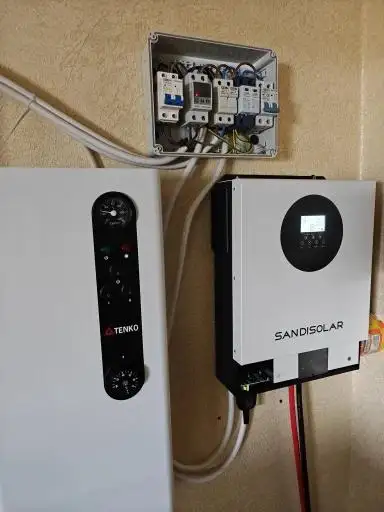
•Вихідний автомат: Між виходом змінного струму інвертора та підщитком має бути встановлено 63A двополюсний (2-полюсний) MCB (мініатюрний автоматичний вимикач).
•Вхідний автомат від мережі до інвертора (вхід зарядного пристрою змінного струму): Інвертор може отримувати електроенергію від електроенергії для зарядки акумуляторів. Слід використовувати окремий двополюсний автомат на 32А або 40А, оскільки струм заряджання обмежений внутрішнім випрямлячем інвертора.
Враховуючи технічні параметри SD-48110W-EU, його вхідна напруга становить 230VAC, що сумісне з більшістю побутових матеріалів. Її функція PF=1.0, прив'язана до мережі, означає, що він споживає активну енергію, тому немає штрафів за коефіцієнт потужності чи зайвого нагрівання проводки.
Розширені переваги інвертора SANDISOLAR для домашнього резервного копіювання
Окрім базової інтеграції, цей сонячний інвертор на 220 В надає додаткові функції для підвищення надійності та простоти використання:
• Режим запуску без батарейки: інвертор може працювати безпосередньо від сонячних панелей, навіть без підключеної батареї. Це зручно під час початкової установки або у разі відмови акумулятора, оскільки дозволяє живити навантаження вдень.
•Активація літієвої батареї (через фотоелектричну або утилітарну систему): Якщо ваша батарея LiFePO4 має захист від глибокої ненапруги (вихідний 0V), інвертор може виконати невеликий імпульс активації, який пробуджує BMS батареї. Це дозволяє уникнути типової ситуації блокування «розрядженої батареї».
•RS485 комунікація для LiFePO4 BMS: інвертор інтерпретує живі дані батареї (стан заряду, температура, напруга комірки), що робить зарядку більш розумною і дозволяє інвертору припинити передачу додаткової енергії, якщо батарея ось-ось перезарядиться або ось-ось досягне глибокого розряду.
• Вбудований Wi-Fi для віддаленого доступу: з будь-якого місця ви можете керувати системою, бачити вихідну напругу, потужність навантаження, стан заряду акумулятора, генерацію фотоелектрики та інше. Використовуючи додаток SANDISOLAR (або інші платформи). Ви також можете дистанційно регулювати режими пріоритету виходу.
• Зарядка з вирівнюванням: Хоча ця функція переважно для свинцево-кислотних акумуляторів, ця функція періодично збалансовує переповнені батареї, якщо ви оберете недорогий акумуляторний банк. Для літієвих батарей зв'язок RS485 BMS забезпечує автоматичне балансування.
Ці технології зменшують обслуговування та підвищують стійкість системи — критично важливо для резервного копіювання всього будинку, яке може працювати без нагляду кілька днів.
Останні слова
Проконсультуйтеся з ліцензованим електриком і дотримуйтесь місцевих норм. Сонячний інвертор на 220 В перетворює ваш дім на тиху, бездимну мікромережу. The SANDISOLAR SD-48110W-EU(подвійний MPPT, зарядка 160A) забезпечує надійний резерв. Завантажте брошуру або попросіть кошторис.
Поширені питання
Питання 1: Чи можливо запускати інвертор без батарейок?
Так, у нього є режим запуску без батарейок, який дозволяє інвертору працювати безпосередньо від сонячних панелей протягом дня.
Питання 2: Як розбудити акумулятор LiFePO4, який перебуває у глибокому розряді?
Цей інвертор оснащений активацією літієвої батареї через фотоелектричну або утилітарну систему, яка може надсилати невеликий імпульс для пробудження батареї у режимі захисту від сну.
Питання 3: Яка максимальна вхідна напруга PV для цього інвертора?
Цей інвертор має максимально допустимий PV вхід 500 В постійного струму та широкий робочий діапазон від 60 до 500 В постійного струму.
Питання 4: Чи потрібен мені кваліфікований електрик для встановлення цієї системи?
Так, через проводку 220V змінного струму та відповідність монтажу та заземлення чинним нормам (NEC/IEC) рекомендується звернутися кваліфікованого електрика.
Питання 5: Чи можливо провести віддалений моніторинг системи?
Так, дистанційний моніторинг можливий через додаток, який може відображати SOC батареї, потужність навантаження та генерацію фотоелектричної енергії завдяки вбудованому Wi-Fi та RS485.


Зв'яжіться з нами
У цій статті
Пов'язані дописи
SANDISOLAR співпрацює з Jinko Solar для реалізації автономного сонячного та акумулюючого проєкту потужністю 10,7 МВт
23 вересня 2026 року
48V 6kW позамережевий інвертор: чому акумуляторні системи на 48V є поширеними для сонячних систем з високою потужністю
31 серпня 2026 року
Встановлення сонячних систем у житлових будинках: технічне підбор, підбор систем і керівництво з монтажу
31 серпня 2026 року